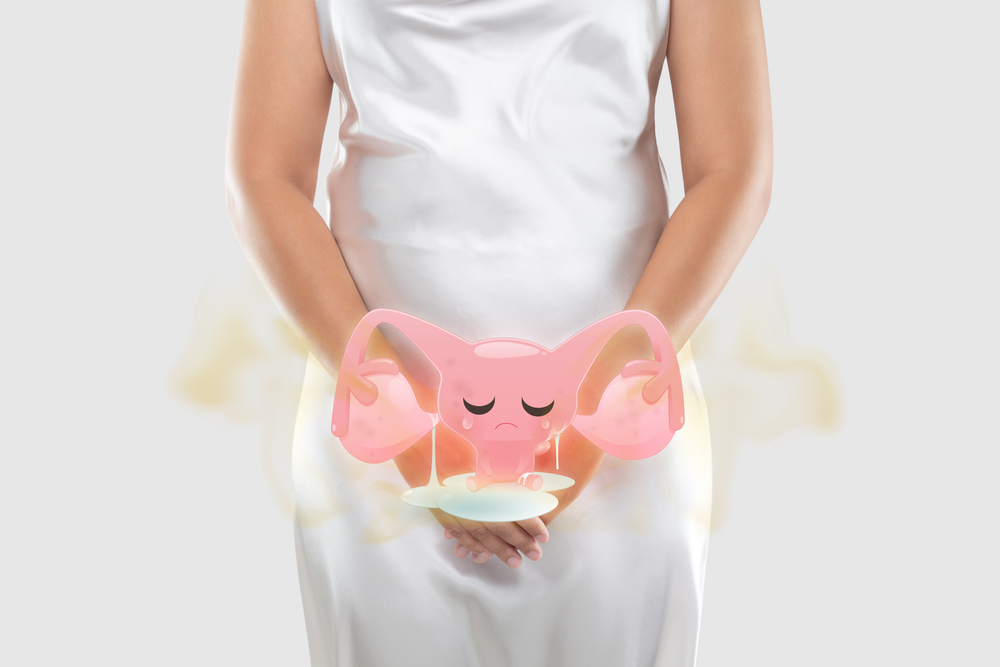
Understand your body. Take care of your health.
Vaginal Discharge – What Is Normal and When Should You Seek Care?
Vaginal discharge is a normal part of the female reproductive system. It helps keep the vagina clean, moist and protected. Its amount, colour and consistency can naturally change throughout the menstrual cycle because of hormonal fluctuations.
Normal discharge is commonly clear or white and generally does not have a strong or unpleasant smell. It may become more noticeable around ovulation, during pregnancy, or with certain hormonal changes.
A sudden change in colour, smell, consistency or quantity, especially with itching, burning or pelvic pain, should not be ignored.
Know What Is Normal
Understanding changes in vaginal discharge can help you recognise what is typical for your body and when to seek care.
What Is Normal Vaginal Discharge?
Healthy vaginal discharge helps maintain the natural environment of the vagina. It contains fluids, mucus and cells and can vary during different stages of the menstrual cycle.
Normal discharge may look or feel different at different times. The amount can also vary from one woman to another.
Remember: More discharge during ovulation, pregnancy or while using certain forms of contraception does not automatically mean there is an infection.
When Can Discharge Be Abnormal?
A change in discharge may require medical assessment, especially when it occurs together with other symptoms. Noticing these warning signs can help you know when to consult a gynaecologist.
Important to know: Different conditions can cause different types of discharge. Symptoms alone cannot reliably establish the cause, so a medical assessment may be needed.
Common Causes of Abnormal Discharge
Different conditions can affect vaginal discharge. Identifying the underlying cause helps guide the right treatment.
Vaginal Candidiasis
Commonly called a yeast infection, it may cause thick white discharge along with itching or burning.
Bacterial Vaginosis
A change in the normal bacterial balance may cause thin, greyish-white discharge with a noticeable fishy smell.
Trichomoniasis
This sexually transmitted infection may cause yellowish or greenish discharge and irritation.
Other STIs
Infections such as chlamydia and gonorrhoea can also cause abnormal discharge and may sometimes have few symptoms.
Hormonal Changes & Irritation
Vaginitis or irritation may also be associated with hormonal changes, certain medicines, douching or changes in the natural vaginal environment.
Important: These symptoms can overlap. Discharge colour or appearance alone cannot confirm which condition is present.
How Is the Cause Diagnosed?
A gynaecologist evaluates your symptoms and medical history to understand what may be causing the change in discharge. Depending on your symptoms, an examination or laboratory testing may be recommended.
Your doctor may ask about:
Treatment Depends on the Cause
Different causes require different approaches. Treatment should be guided by a healthcare professional rather than by discharge appearance alone.
Bacterial Infections
Bacterial vaginosis and other bacterial infections may require specific prescription medicines.
Fungal Infections
Yeast infections are treated with appropriate antifungal medicines when the diagnosis supports it.
Sexually Transmitted Infections
Testing and targeted treatment are important. Partner evaluation or treatment may also be advised.
Avoid repeated self-treatment. Using medicines without identifying the cause can delay correct treatment. Seek medical advice if symptoms persist or return.
Healthy Vaginal Hygiene
The vagina naturally maintains its own environment. Excessive cleaning or strongly perfumed products may cause irritation or disturb its natural balance.
Gentle external cleaning with water and avoiding unnecessary fragranced products can help reduce irritation.
Products and practices to avoid:
When Should You Consult a Doctor?
Arrange a gynaecological consultation if you notice any of these changes, especially if they persist or worsen.
Your discharge suddenly changes colour.
It develops a strong or unpleasant smell.
The amount becomes significantly heavier.
You experience itching, burning or irritation.
You have pelvic pain or pain while urinating.
You notice bleeding along with unusual discharge.
Seek prompt medical care for severe pelvic pain, fever with pelvic pain, heavy bleeding, or if you are pregnant and have pain, bleeding or fluid leakage.
Understand the Changes.
Take Care of Yourself.
Vaginal discharge is often a normal and healthy part of the reproductive system. The important thing is recognising when its usual pattern changes. A proper gynaecological evaluation can help identify the cause and guide appropriate treatment.
Book an Appointment →